Tuesday, 14 February 2012

Leymus arenarius or Leymus mollis ?

Leymus in our garden at Lovegrass Farm; grown from seed
I believe this grass to be either Leymus arenarius (European dune grass) or Leymus mollis (Northern beach grass).  I don't mind admitting that  I have a lot to learn about identifying grasses in the wild.  If anyone can help me out here I'd appreciate it!  It would probably help if I had taken a photo of the plant in bloom at the shore but don't often think to bring along the camera when we're going for eel grass.  We've grown our plants from seed wild collected on the north shore and bays where we collect eel grass.  Leymus grows along the coasts in beach sand tolerating salt spray as well as salty soil.  It spreads by rhizomes (underground stems) to form dense clumps. It's soft blue leaves and straw flowers just say Summer & Shore to me!
Leymus grown from seed wild collected on P.E.I.
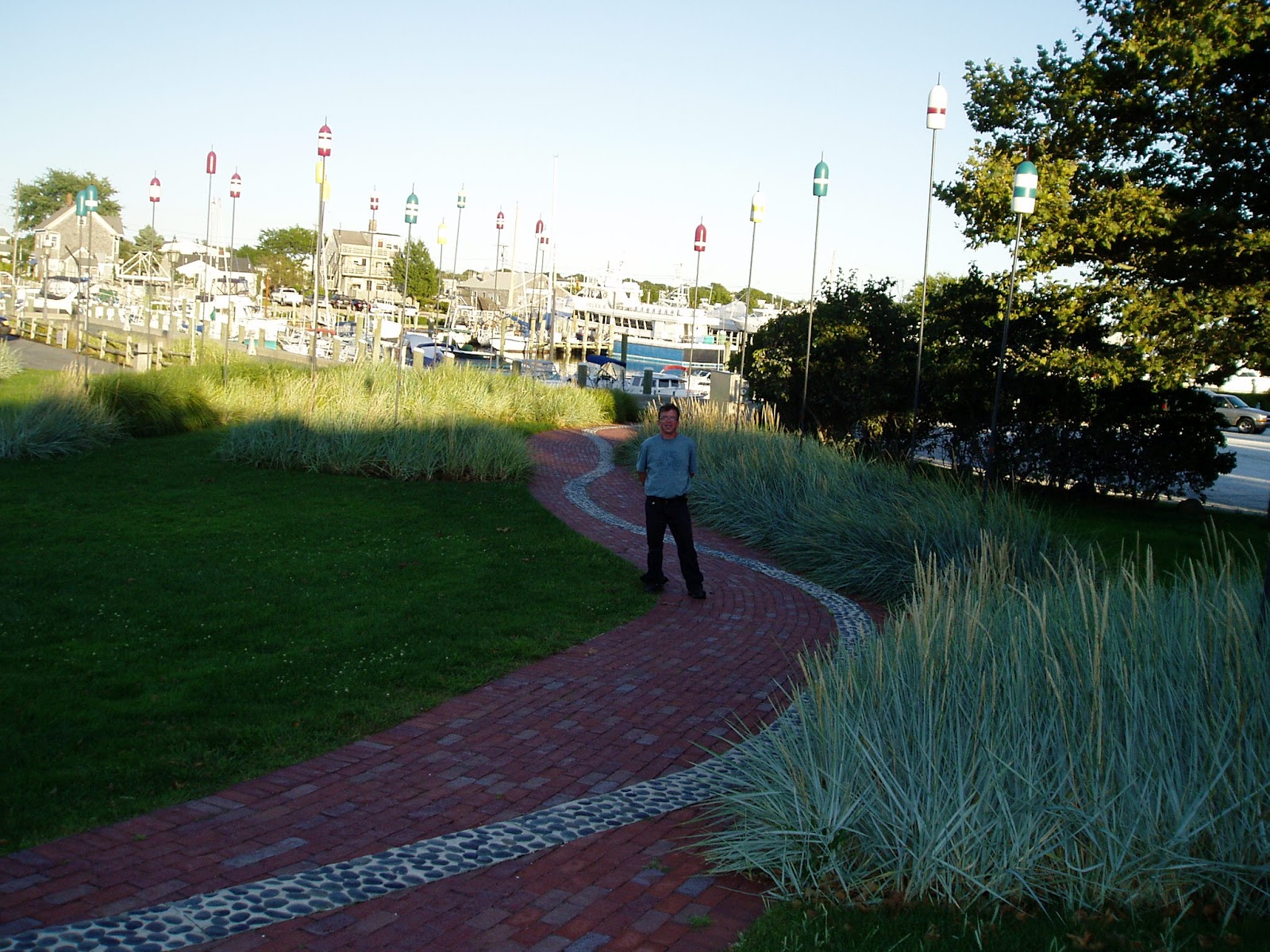
This is Not a grass to mix in your perennial border but perhaps would be a good choice on saltwater shorelines where you may be battling aggressive weeds or at a cottage.  We've also seen it used in Plymouth, Mass. in a park by the ocean and in parking strips and medians where it will stay confined.
Leymus in a park in Plymouth, Mass.
Leymus used in a median in Plymouth, Mass.

Monday, 13 February 2012

Carex Muskingumensis (Palm sedge)

Carex Muskingumensis (Palm sedge)
Carex (KAIR-ex) Muskingumensis (mus-king-goo-MEN-sis) or (Palm sedge) is a versatile sedge that tolerates considerable drought and will grow in damp or wet soils.  This hardy Native plant occurs naturally in moist habitats but we grow it in full sun in sandy soil at Lovegrass Farm.  In full sun the leaf color is lighter and the plant spreads more slowly.  Folks are often looking for a grass that will grow well under light shade and tolerate tree roots.  This would be ideal for that purpose.  Palm sedge has unique foliage; bright green leaves that branch out from the main stem similar to a palm tree  to a height of 2 ft. (60 cm.).  Terminal inflorescence's open green in late spring and turn light brown.  The palm like texture of the leaves has a tropical feel and looks great mixed with broad leaved plants like Ligularia or ferns in damp shade.  It is a slowly creeping warm season sedge that is durable and long-lived and well suited for ground cover use.
Carex Muskingumensis at Denver Botanic Gardens in October, 2011
Carex Muskingumensis at Lovegrass Farm in late fall

Thursday, 9 February 2012

Bouteloua gracilis (Blue Grama) Ornamental Grass


Bouteloua gracilis (Blue grama) October, 2011
Bouteloua (boo-tuh-LOO-ah) gracilis (grah-SIL-is) or Blue grama grass is sometimes called Gramma's Eyebrows or Mosquito grass.  It's flowers are all concentrated to one side of the flowering stem and held at a horizontal angle like an eyebrow or tiny brush.  A mature plant or grouping can resemble a swarm of flying insects.  Blue grama has fine leaves & stems with blue-green seed heads that change to a purple/brown and bleach to a straw color and often curl up as they dry.  Unfortunately, I only have late season photos to show you.  It's small size of 8 - 15 inches (20 - 38 cm.) in full flower makes it among the shortest of the native ornamental grasses.  This warm season grass is easily grown in a wide range of soils in Full Sun as long as they are well-drained.  Hardy to Zone 3, Blue grama is an excellent choice for rock gardens, naturalised areas, native plant gardens, and unmowed meadows especially where drought tolerant plants are needed.
Bouteloua gracilis at the Denver Botanic Gardens in October, 2011
Blue grama at the Denver Botanic Gardens in October of 2011
Blue grama at the Denver Botanic Gardens in October, 2011
Blue grama can be used for a no-mow ground cover and is often mixed with Buffalo grass and/or wildflowers and mowed occasionally to 2 - 4 in. (5 - 10 cm.) for a lawn.  You might not want to mow and miss out on the showy flowers.  Uncut meadows of blue grama are stunning backlit with the rising and setting of the sun!  It attracts Birds & Butterflies and is a Larval Host for Skippers.  It's seeds are eaten by granivorous birds.  We have blue grama in our meadow at Lovegrass Farm.  It was very common in the wild in the high desert area we visited in Colorado.  We found it to be much shorter in the wild and as can be seen in the above photo it is great to control erosion on slopes.
Bouteloua gracilis 'Blonde Ambition' at Denver Botanic Gardens
There are different seed strains available of Blue grama.  'Blonde Ambition' is a 2011 Plant Select Winner discovered by David Salmon; Chief Horticulturalist of High Country Gardens.  It is much taller than the common wild plant (2 1/2 to 3 ft.) (75 - 90 cm.). 

Sunday, 5 February 2012

Sterile Cultivars??


Festuca glauca 'Elijah Blue', Aug. 12, 2011 at Lovegrass Farm
I have read that 'Elijah Blue' is a Sterile Cultivar of Festuca glauca.  Have Fellow Gardeners found this to be True Or Not?  We've never noticed it to seed out for us but we've had gardeners lamenting that their blue fescues seed out.  I have a photo taken at the Botanic Gardens in Denver last Fall where you can visibly see the fescue seeding out but I'm not sure of the variety.  Wish I had taken notes, but like a kid in a candy store I was overwhelmed by So Much to See in a few hours!  We've never had a lot of seedheads on our fescue plants.  I've also read that the color looks more vibrant with the seedheads removed.  That makes sense for the plants' energy would be used for continued growth instead of making seed but I happen to like the look of the seedheads.   Our Native variety of Deschampsia cespitosa definitely does seed out but I've never noticed that happening with the cultivar; Deschampsia 'Bronzeschleier'.  All it takes is a little hoeing out to get rid of any of these unwanted seedlings so I personally do not consider it a problem.  Curious to know what other gardeners' experience has been!

'Elijah Blue' July 5, 2011 at Lovegrass Farm
The same plants Aug. 22, 2011
Festuca glauca at Denver Botanic Gardens in Oct., 2011


Wednesday, 1 February 2012

Giving Blue Oat a Haircut

Winter die back on Blue oat grass, 2011
Blue Oat Grass (Helictotrichon sempervirens) is semi evergreen in our climate.  It depends on the winter we have how it's going to look come Spring.  Some years we only have to run our fingers through the plant  to remove dead leaves.  Other years (2011 being one of them)  there was much more die back and we had to trim them back severely.  We had a reasonably mild winter and lots of snow cover last year.  It's hard to say why there was so much damage.  These photos will show you that they will still regrow and look fabulous again before you know it, so don't despair!
Blue Oat after its Haircut April 23, 2011
By May 3, 2011 It's starting to grow out
By May 16 It's filling out nicely
By June 1 you'd never know it had a haircut
It's June 24 and it's looking spectacular!
It's July 18, 2011 (the same plants)
This proves that you're not going to hurt the plant by trimming back severely, you may even encourage it to thicken up!

Tuesday, 31 January 2012

Down By The Seashore

The North Shore of P.E.I. in August, 2011
Our shorelines are filled with So Many Beautiful Native Plants.  It's Amazing that so many plants will grow and thrive in such harsh conditions.  Native plants literally hold the sand together with their roots, preventing erosion and the ultimate moving of the dunes.  These photos were taken in late August of 2011 on our North Shore in P.E.I.
Artemisia stelleriana (Dusty Miller)
Wild bayberry (Myrica pensylvanica)
I've learned that salt can be extremely beneficial to certain types of plants and shrubs that thrive in the sand.  Salt spray can act as an anti fungal and is even known to deter bugs.  Beach plants have clever ways to get rid of salt.  A native P.E.I. grass; Spartina alterniflora (Salt water cord grass), is adapted to live in salt water.  Excess salts are removed from the plant by epidermal salt glands.
Wild bayberry (Myrica pensylvanica) is an excellent green shrub for the shore.  Its shiny green leaves last well into late fall when it is full of grey scented berries loved by birds and also used for bayberry candles.  It thrives in the sand with no maintenance for its root nodules contain nitrogen-fixing microorganisms which allow it to grow in poor soils.

Sea Lavender (Limonium carolinianum) is a perennial, salt-marsh plant that grows 1 - 2 ft (30 - 60 cm.) high and has abundant, small, pale purple flowers on branching clusters.  Sea lavender blooms create the appearance of a delicate purple mist on the salt marsh during the late summer.  We often collect sea lavender to dry, made my first wreath with it last fall.  It is sort of a rite of summer like berry picking.

Seaside goldenrod (Solidago sempervirens) is a native perennial that is well adapted to the landward side of fronting dunes, low secondary dunes, and edges of salt marshes.  The fleshy, waxy leaves growing abundantly along the entire length of the stem help retain moisture that would otherwise be lost to the drying effect of salt spray.  Its bright yellow flowers are larger than those of the typical goldenrod and provide a great show in late summer and early fall.  We have them growing wild in our field as well.  I guess that tells you how sandy our soil is!  They make a lovely cut flower!

Seaside Goldenrod (Solidago sempervirens)
A windy day at the shore

Friday, 20 January 2012

Sporobolus heterolepsis (Prairie dropseed) at Lovegrass Farm


Sporobolus heterolepsis (Prairie dropseed) Sept. 2, 2011
Sporobolus (spor-AH-bol-us) heterolepsis (het-er-oh-LEP-is) or Prairie dropseed is a warm season grass that is refined enough to fit into formal gardens and is also a natural choice for prairie and meadow gardens.  It's very fine arching leaves; to 20" (50 cm.) turn from summer green to gold/orange in the fall.  Tall, wispy inflorescence's 30" (75 cm.) high rise up thickly over the tufts, with fine panicles of tiny flowers and seeds.  The flowers produce nectar for bees, butterflies & hummingbirds.  The seed bracts are white when ripe and the flower stems turn the same orange color as the leaves in the fall.
Prairie dropseed July 5, 2011 (showing fine foliage)
Prairie dropseed July 18, 2011 (moves in the breeze)
Prairie dropseed Early Aug, 2010, Rooftop garden at Boothbay Botanical Gardens in Maine
Prairie dropseed prefers dry sandy soil but does great on a wide range of soil types.  It is deep rooted and extremely drought tolerant once established which makes it very effective for erosion control on a slope and it is now being used in roof top gardens.
Aug. 5, 2011 (starting to flower)
Aug. 25, 2011 (at sunset)
It is a slow grower that takes about 4 years to reach blooming size from seed but will grow without care for decades without any centre die back or need for renewal and is hardy to Zone 3.  Prairie dropseed likes full sun or light shade and makes a well-defined and distinctive border when planted 18 - 24" (45 - 60 cm) apart.  It's hairlike foliage is ideal for softening edges of sidewalks and patios.  It does not freely self-seed in the garden.  Prairie dropseed is on the threatened and endangered species list in Saskatchewan, Canada and in some of the United States.
Oct. 2, 2011 (fall stem color is starting to show)
Oct. 19, 2011 (changing color)
Prairie dropseed rivals Little Bluestem in mass plantings.  Inter plant with spring bulbs so you have a show before the grasses grow and inter plant narrow leaved echinaceas, liatris & sedum "Matrona' for a later show.  They also have an added bonus of a unique fragrance that has been compared to coriander or popcorn.  I found that it was especially noticeable when the air was calm.  The edible seed head is an attraction to birds.  Plains Indians ground the seed to make a tasty flour.
I can't say enough about this low-maintenance plant!  Sunrise and sunset; especially with dew or frost made it look Spectacular!  I truly enjoyed watching it change through the seasons!